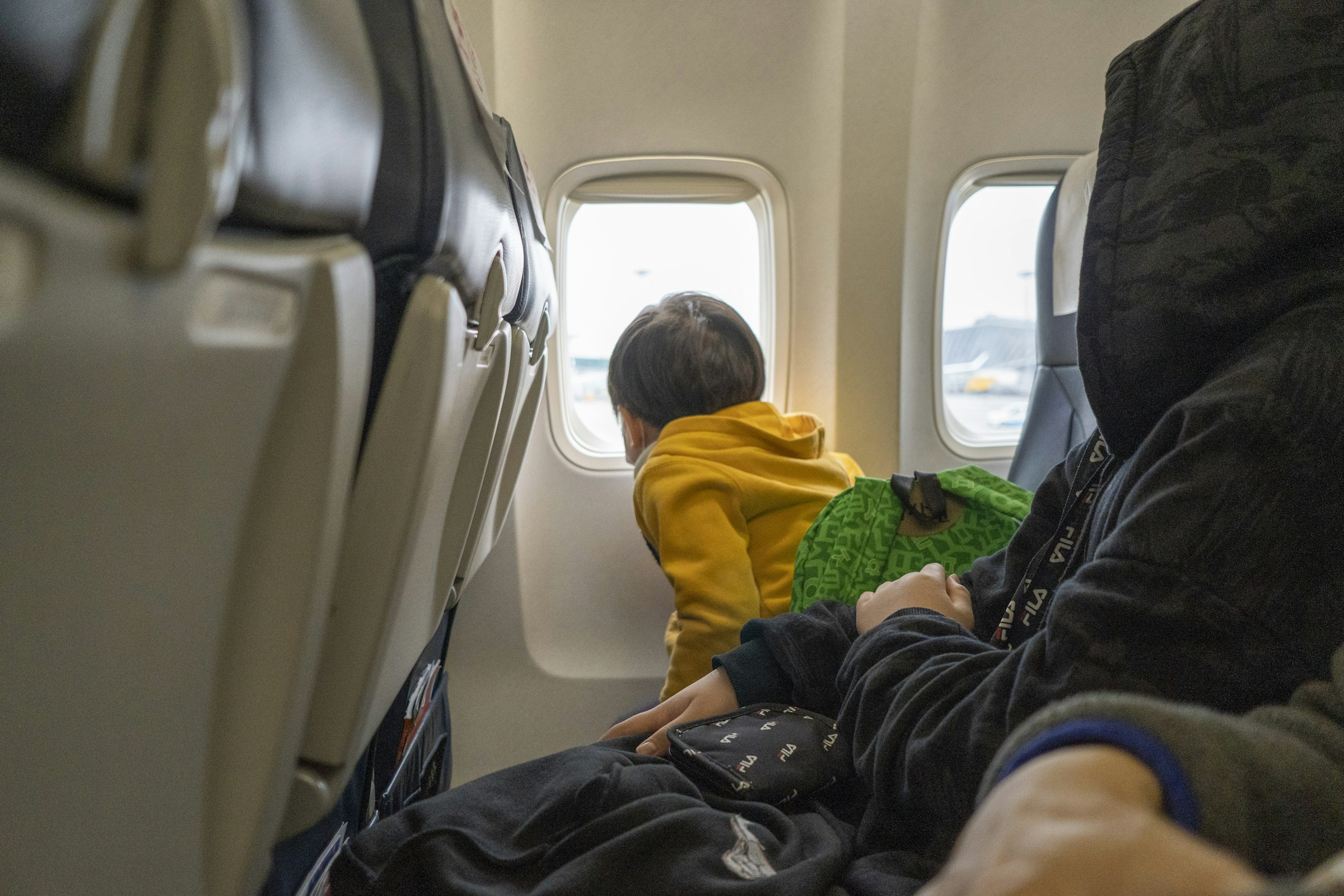
Nobody remembers the smooth flights. They remember the one where the snacks ran out over Nebraska. Flying with small kids is less about having a perfect plan and more about stacking the odds, one small decision at a time.
Here is what actually helps, from booking the seat to the moment the wheels touch down, with the rules checked against the FAA and TSA rather than a friend of a friend.
✈ The Short Version
Book
A seat of their own, with an approved car seat or CARES harness if they fit
Security
Formula, breast milk and baby food can exceed 3.4 oz. Take them out to be screened
Ears
Something to suck or swallow on descent, which matters more than takeoff
Pack
Small new things, released slowly. One surprise an hour goes a long way
Buy the seat, if you can
Children under two can fly on a parent’s lap, and on a short hop it can be fine. But the FAA itself says it strongly discourages it, and it is blunt about the trade: buying a ticket for your child is the only way to guarantee you can use a car seat on board.
If you bring the car seat, look for the label that reads “This restraint is certified for use in motor vehicles and aircraft.” No label, no seat. The FAA also suggests measuring it first: a seat no wider than 16 inches fits most airplane seats. For toddlers who have outgrown the bucket seat but are still small, the CARES harness is the FAA-certified alternative: it loops around the seatback and works for kids between 22 and 44 pounds and up to 40 inches tall. It weighs about a pound and packs down small, which beats hauling a car seat down the jet bridge. One caution from the FAA itself: counterfeits are sold online, so buy from the maker’s own listing.

Security is easier than it looks
The liquids rule bends for families. TSA treats formula, breast milk, toddler drinks and baby food as medically necessary, so they can go over 3.4 ounces and they do not have to fit in your quart bag. Pull them out and tell the officer before screening starts. Ice packs to keep them cold are allowed too.
Two small things that save time: shoes now stay on for everyone, and children 12 and under can keep their light jackets and hats on too. Clear bottles also screen more easily than squeeze pouches, which the liquid scanners sometimes cannot read.
Board first, or board last
Most airlines offer some form of family boarding, and it is worth taking if you have a car seat to install. If you do not, there is a case for the opposite. One parent boards early with the bags and sets up the row while the other lets the kids run laps at the gate and boards last. Ten fewer minutes in a seat is ten minutes you get back at 30,000 feet.

Ears: think about the descent
Everyone braces for takeoff, but the pressure change that makes little ears hurt is usually worse on the way down. Swallowing helps equalize it, so save the bottle, the nursing session, the pacifier or the chewy snack for when the plane starts its descent, roughly half an hour before landing. A sleeping baby on descent is a gift. A crying one is often a baby whose ears are working it out, and it usually passes.
The bag that saves the flight
Kids are not bored by a lack of things. They are bored by things they have already seen. The trick parents swear by is a handful of small, new, cheap things, wrapped if you have the patience, handed out one at a time. Sticker books, a water-reveal coloring pad, bendy wax sticks: quiet, mess-free and nothing that rolls under the seat in front.
Screens are not a failure. Download shows before you leave, because airplane Wi-Fi is not something to plan a toddler around, and pack headphones with a volume limit. Around 85 decibels is the commonly cited ceiling for kids. And pack a full change of clothes for every child and one shirt for yourself. You will thank us!

Give them the window
This one is free. A window seat turns a flight into a show: the baggage carts, the runway lights, the clouds from above. So make it a game! Before you leave, find one river, one mountain or one stretch of coast that your route crosses, and see who spots it first. Then keep a running count of the small stuff: other planes, baseball diamonds, swimming pools, a train. Kids who are hunting for something stop asking how much longer. If you want to know which side to book for the view, we wrote a whole guide: Which Side of the Plane Should You Sit On?
✈ The Family Flight Kit
Safety
CARES Airplane Safety Harness
The FAA-certified way to strap in a toddler without a car seat. For kids 22 to 44 pounds, up to 40 inches tall.
Ears
Puro JuniorJam Plus Headphones
Volume limited to 85 dB, wireless, and comfortable enough that kids actually keep them on.
Quiet play
Melissa & Doug Water Wow!
Paint with water, watch the picture appear, let it dry and do it again. No ink, no mess.
Quiet play
Melissa & Doug Reusable Sticker Pads
Reusable scenes and stickers that peel off and go again, which means the fun lasts all flight.
Quiet play
Wikki Stix Rainbow Pak
Bendy wax sticks that stick to the tray table and to each other. Endlessly fiddly, in the best way.
Snacks
OXO Tot Snack Cup
Soft flaps let small hands in and keep the crackers from ending up in the aisle.
Screens
KDD Airplane Tablet Holder
Clamps the tablet at eye level so nobody is holding it for three hours.
This is part of The Window Seat Guide, our series on the seat itself. Also in the series: Which Side of the Plane Should You Sit On? and How to Photograph From the Window Seat.
Lead photo by minho jeong on Unsplash. The Window Seat is a participant in the Amazon Services LLC Associates Program. Links in the kit above are affiliate links, and we may earn a small commission on qualifying purchases at no extra cost to you. Rules referenced from the FAA and TSA; airline policies vary, so check yours before you fly.

Leave a Reply