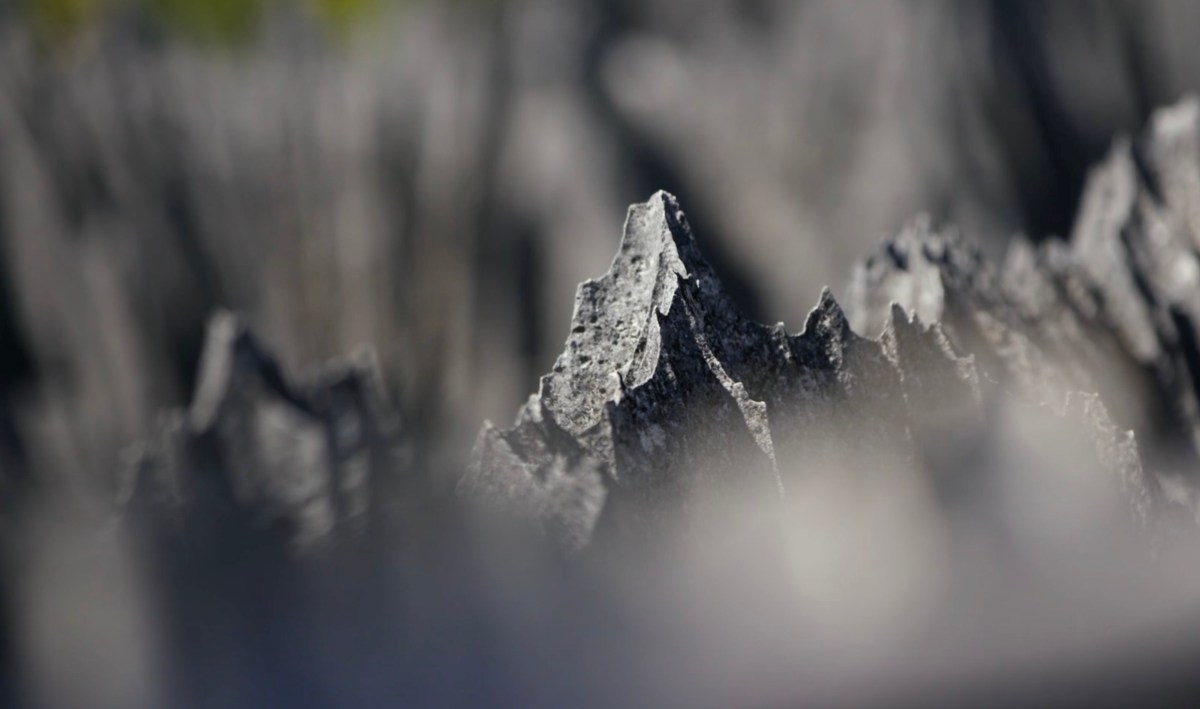
Madagascar is unlike anywhere else on Earth. Isolated from the African continent for around 88 million years, this vast island has evolved its own extraordinary cast of wildlife, landscapes, and ecosystems — around 90% of which exist nowhere else in the world. And at the heart of its most otherworldly scenery stands the Tsingy de Bemaraha: a stone forest so alien in appearance that it feels borrowed from another planet entirely.

The Tsingy — A Forest of Razors
The word “tsingy” comes from the Malagasy language and roughly translates as “where one cannot walk barefoot” — and one look at these formations explains exactly why. Over millions of years, monsoon rains have carved the region’s limestone plateau into a labyrinth of razor-edged pinnacles, some rising to 120 metres, separated by deep chasms and canyons. The result is one of the most visually spectacular — and genuinely treacherous — landscapes on the planet.

A UNESCO World Heritage Site
The Tsingy de Bemaraha Strict Nature Reserve has been a UNESCO World Heritage Site since 1990, recognised not only for its dramatic geology but for the remarkable biodiversity sheltered within its labyrinthine walls. Despite its apparent hostility, the stone forest is teeming with life — lemurs traverse the pinnacles with astonishing agility, birds of prey nest in the high crags, and rare reptiles cling to the rock faces in the afternoon heat.

The Aerial View
Seen from the air, the Tsingy becomes something even more extraordinary — a vast grey ocean of serrated stone stretching to the horizon, bisected by the Manambolo River gorge. The scale of it is almost impossible to comprehend from ground level. Helicopter flights and drone photography have revealed just how immense and unrelenting this stone forest truly is.

Getting There
Reaching the Tsingy requires commitment. The nearest town, Bekopaka, is accessible by a rough road from Morondava — a journey that, depending on the season, can take the better part of a day. The reward for that effort, however, is a place that feels genuinely untouched. Guided walks through the formations, suspension bridges strung between the pinnacles, and the near-certainty of spotting endemic wildlife make this one of the most extraordinary adventures available to travellers in the Indian Ocean region.

Beyond the Stone Forest
Madagascar has no shortage of remarkable experiences beyond the Tsingy. The Avenue of the Baobabs near Morondava is one of Africa’s most iconic road-trip images — ancient trees that look like they’ve been planted upside-down, glowing golden in the late afternoon light. The rainforests of Ranomafana and Andasibe shelter dozens of lemur species, chameleons in improbable colours, and bird species you’ll find nowhere else. And the beaches of Nosy Be offer the kind of tropical perfection that tends to make the return flight feel very unwelcome indeed.



Leave a Reply