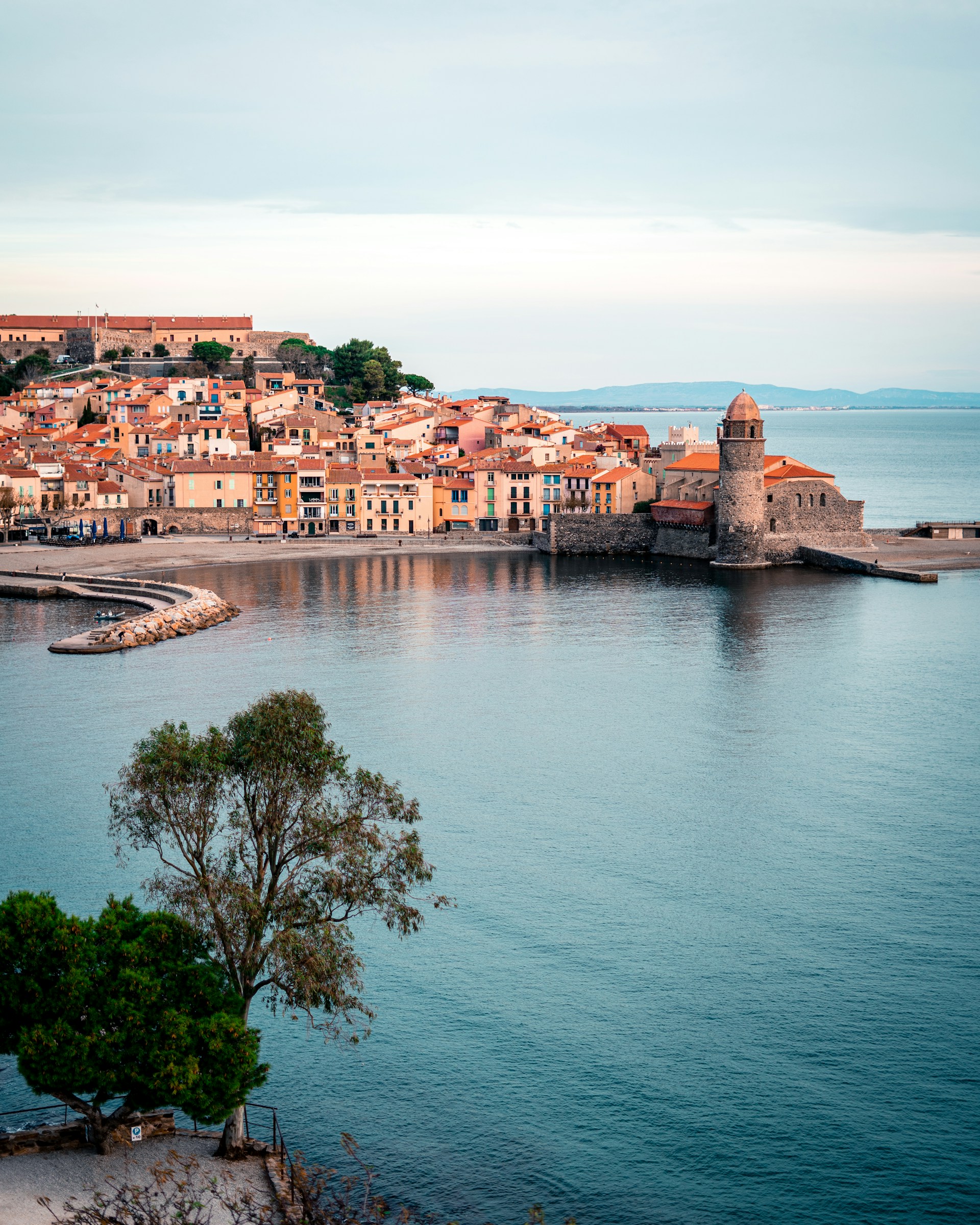
The French Riviera — Nice, Cannes, Monaco — draws millions of visitors a year and has come to define what “the French coast” means in the international imagination. It’s beautiful, and it’s worth seeing. But France has more than two thousand kilometers of additional coastline, ranging from the wild granite headlands of Brittany to the Basque cliffs above the Bay of Biscay, and most of it operates at a completely different frequency from the Riviera’s glamour circuit. Here are five stretches that reward the effort of getting there.
✈ Trip at a Glance
Where
5 French coastlines, from the Opal Coast to Biarritz
Best time
May, June or September, avoiding the busy August holiday rush
Getting there
Trains from Paris, then a rental car for Brittany and Normandy
Pace
About a week on one stretch of coast, exploring by car or bike
Budget
$$ Moderate
Worth it if
You want the French seaside without Riviera prices and crowds
1. The Côte d’Opale, Northern France
Just two hours from Paris by train (change at Boulogne-sur-Mer), the Opal Coast is named for the milky-green light that falls on its chalk cliffs and wide, windswept beaches. The landscape here looks more like southern England than southern France — for good reason, since you can see the white cliffs of Dover from Cap Blanc-Nez. The town of Wimereux has a belle époque promenade and one of the best seafood restaurants in northern France (Epicure). Montreuil-sur-Mer, 20 kilometers inland, is a fortified town where Victor Hugo set Les Misérables and where local chef Alexandre Gauthier runs a two-Michelin-star restaurant worth the drive alone.
2. Brittany’s Finistère Peninsula
Finistère — “the end of the earth” — is the westernmost point of France, a peninsula of granite headlands, dolmens, and fishing villages where Breton is still spoken and the ocean is relentlessly Atlantic. Pointe du Raz, the dramatic cape at the tip, feels genuinely elemental on a rough day. The island of Ouessant, reachable by ferry from Brest, is one of the most remote inhabited places in France — a community of lighthouse keepers and sheep farmers where the houses are painted in colors you don’t see on the mainland. Base yourself in Quimper, a medieval Breton city with a Gothic cathedral and excellent crêperies, and explore by car.
3. Normandy’s D-Day Coast and Mont Saint-Michel
The beaches of the Calvados coast carry such historical weight that it can be hard to see them as landscapes — but they are: wide, grey, tide-scoured, with a sky that moves constantly overhead. Spending a morning at Omaha Beach, with its perfectly maintained American cemetery, is one of the most quietly powerful experiences in European travel. The coast between Bayeux and the D-Day beaches is only three hours from Paris by a combination of train and car; Bayeux itself, home to the tapestry that depicts the 1066 Norman conquest of England, is worth a half-day. Mont Saint-Michel — the tidal island abbey at the border of Normandy and Brittany — is the most visited monument in France outside Paris, and rightly so. Arrive at low tide, on foot across the causeway, before the tour buses.
4. The Île de Ré, Atlantic Coast
Connected to La Rochelle by a three-kilometer bridge, the Île de Ré is 30 kilometers of salt marshes, oyster beds, whitewashed villages with blue-shuttered houses, and cycling paths through pine forests. It’s one of the most popular domestic holiday destinations in France — meaning it fills up in August — but in May, June, or September it operates at a leisurely pace that the Riviera never achieves. Rent bikes (the island was built for them), eat oysters at a table in a working salt marsh, and stay in one of the converted fisherman’s cottages in Saint-Martin-de-Ré, the island’s prettiest town. Prices are significantly lower than comparable Riviera destinations.
5. The Basque Coast: Biarritz and Beyond
Biarritz sits at the point where the Pyrenees meet the Atlantic, and the collision — both literal and cultural — gives it an energy unlike anywhere else in France. The surf here is serious (Biarritz hosts a world championship longboard competition in July); the food mixes French technique with Basque ingredients (Espelette pepper, salt cod, sheep’s milk cheese from Ossau-Iraty); and the architecture runs from belle époque grand hotels to modernist villas built for aristocratic surfers in the 1960s. Drive 20 minutes south to Saint-Jean-de-Luz, a harbor town that still sends out fishing boats for tuna and anchovy, and eat at the market. Cross the border at Hendaye and you’re in the Spanish Basque country, with San Sebastián an hour away — one of the great food cities in Europe.
The Riviera is France performing for the world. The rest of the French coast is France being itself — rougher, more particular, more interesting to actually live in for a week. Any of these five destinations will give you that, and most of them will cost you considerably less than a hotel in Cannes in July.

Leave a Reply